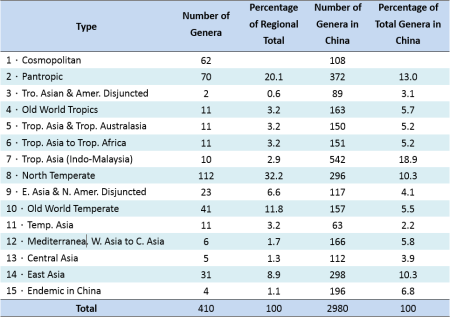
With moderate climate, ample sunlight and adequate rainfall, the Yimengshan Geopark offers suitable habitats for temperate and subtropical plants to grow and flourish. The local vegetation is part of North China flora. 15 areal types of the seed plant flora in China occur in the geopark. Among them are 218 temperate genera (types 8-11 and 14), representing 62.6% of total genera of this flora.
The geopark is richly vegetated with forest coverage of about 85%. With an ultra-high negative oxygen ion content, it is an extremely clean and pristine area. With such pure environment, Yimengshan is hailed as a "Natural Oxygen Bar" and the "Best Green and Fitness Travel Destination in China". The geopark supports more than 1,100 vegetation species, including 860 wild vascular plants that belong to 123 families and 437 genera, representing about 70% of Shandong flora. The Mount Mengshan vegetation commands very high value in the research of biodiversity conservation.
Juglans mandshurica
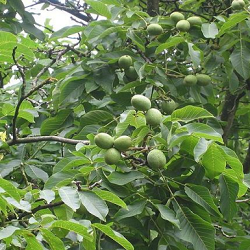
Rare class two state protection species of the Juglandaceae family. This deciduous tree can grow to over 20 metres tall. It has broad foliage and a flat rounded canopy. Bark is grey with shallow vertical furrows. It prefers dry climate and is cold tolerant. There is an ancient saying that "A walnut tree that does not bear fruit is a Manchurian walnut". Manchurian walnut wood is widely used to make furniture.
Kalopanax septemlobus
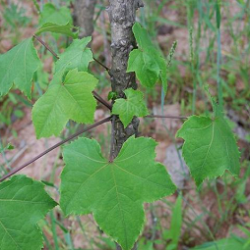
Valuable class two state protection species of the Araliaceae family. This deciduous tree can grow to over 30 metres tall. Bark is grey with thick hard thorns. Castor aralia is listed as a poisonous plant in China's plant illustration database. The saponin extracted from its heartwood is an effective pesticide that can kill termites. This tree has hard wood in vertical streaks. Applications include building material, furniture and railroad tie.
Quercus Mongolia
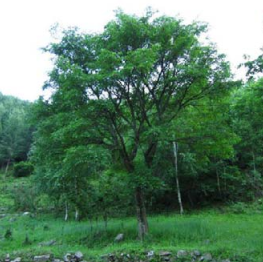
Valuable class two state protection species, genus Quercus, family Fagaceae. This deciduous tree can grow to over 30 metres tall. Bark is greyish brown with deep vertical furrows. It is a monoecious tree with ovate canopy and imperfect flowers. Nuts are ovate or elliptic. Mongolian oak is an ideal choice for building windbreak forests, water conservation forests and firebreak forests.
Schisandra chinensis
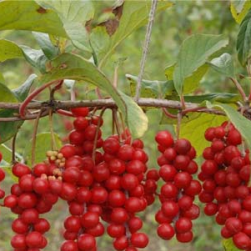
Class two priority protected wild plant species of the Schisandraceae family. It is well distributed in Mengshan Mountain. The fresh schisandra fruit is a juicy red berry that tastes sour and slightly bitter. It has a pungent smell of Sichuan peppercorn. Fresh schisandra juice is the ingredient for processed natural health drink. When dried, the berry turns dark purple and wrinkled.
Polygonum multiflorum
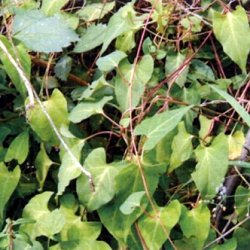
Polygonum multiflorum thunb. is one of the "Three Treasures of Mengshan Mountain". It delays the aging process and delivers remedial actions like lowering blood lipid levels and preventing atherosclerosis, protecting the liver and preventing bacterial infection.
Lonicera japonica
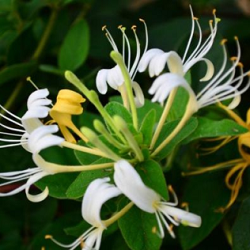
Grown mainly in Pingyi county, honeysuckle is an authentic medicinal herb of Yimengshan. Honeysuckle farming goes back a long way and the high crop quality has earned Pingyi the title "Honeysuckle Hometown of China" from the Ministry of Agriculture. The Pingyi honeysuckle has higher quantities and contents of active ingredients than honeysuckle of other origins. Pingyi is the biggest honeysuckle distribution centre in China.
Ginkgo biloba L.
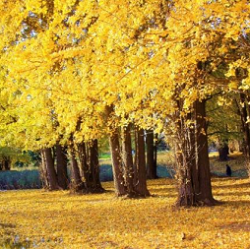
Class one state protected plant species, genus Ginkgo, family Ginkgoaceae. Diameter at breast height of this deciduous tree can reach 4 metres. Bark is nearly smooth when young and light grey in colour. Full-grown trees have greyish brown coarse bark with irregular vertical furrows. Ginkgo is the oldest relic plant among all gymnospermae species from the Quaternary glacial movement. Extant individuals are sparsely distributed and dispersed.
Cephalotaxus fortunei Hook. f.
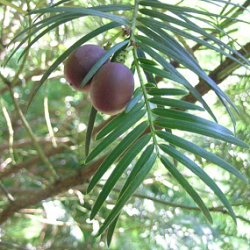
Evergreen tree of the Cephalotaxaceae family measuring 10-20m in height. Bark is greyish brown to reddish brown. Branches are long and slightly droop. Broad round canopy. It is a species endemic to sub-tropical regions. It has insect repelling and anti-cancer actions.
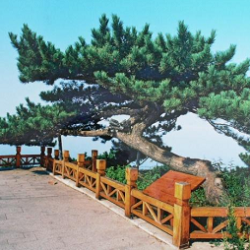
Wolong Pine
 无障碍浏览
无障碍浏览